We're open

Type 2 Diabetes: Know Your Risk, Recognise the Signs and Take Action Early Your Consent to Receive the Flu Vaccination Introducing EMMA – Our New Telephone Assistant Your Summer Health Guide: Simple Steps to Help You and Your Family Stay Well Spring Into Health: Your April Guide to Wellbeing in Huddersfield
Type 2 Diabetes: Know Your Risk, Recognise the Signs and Take Action Early
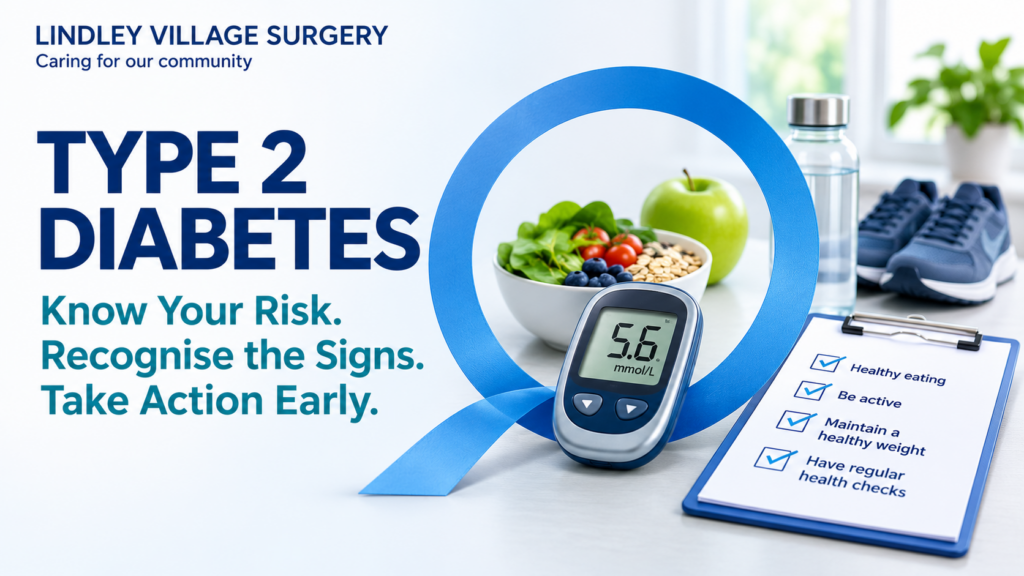
Type 2 diabetes is a common health condition that affects how your body uses glucose (sugar) for energy. It can develop gradually, sometimes without any obvious symptoms, meaning people may have the condition without realising it.
The good news is that knowing your risk, recognising the warning signs and making positive changes can make a real difference. For some people, taking action early can help prevent or delay the development of Type 2 diabetes.
With World Diabetes Day on 14 November, this is a good opportunity to understand the condition, learn what increases your risk and consider the steps you can take to look after your health.

What is Type 2 Diabetes?
Your body uses a hormone called insulin to help move glucose from your blood into your cells, where it is used for energy.
With Type 2 diabetes, your body either does not produce enough insulin or the insulin it produces does not work properly. This is known as insulin resistance. As a result, glucose builds up in your bloodstream, causing blood sugar levels to become too high.
Unlike Type 1 diabetes, which is an autoimmune condition, Type 2 diabetes is strongly associated with a combination of genetic, lifestyle and environmental factors.
It is a long-term condition, but with the right support, treatment and ongoing management, many people can live healthy and active lives.
What are the warning signs?
Type 2 diabetes can develop slowly, and not everyone experiences noticeable symptoms.
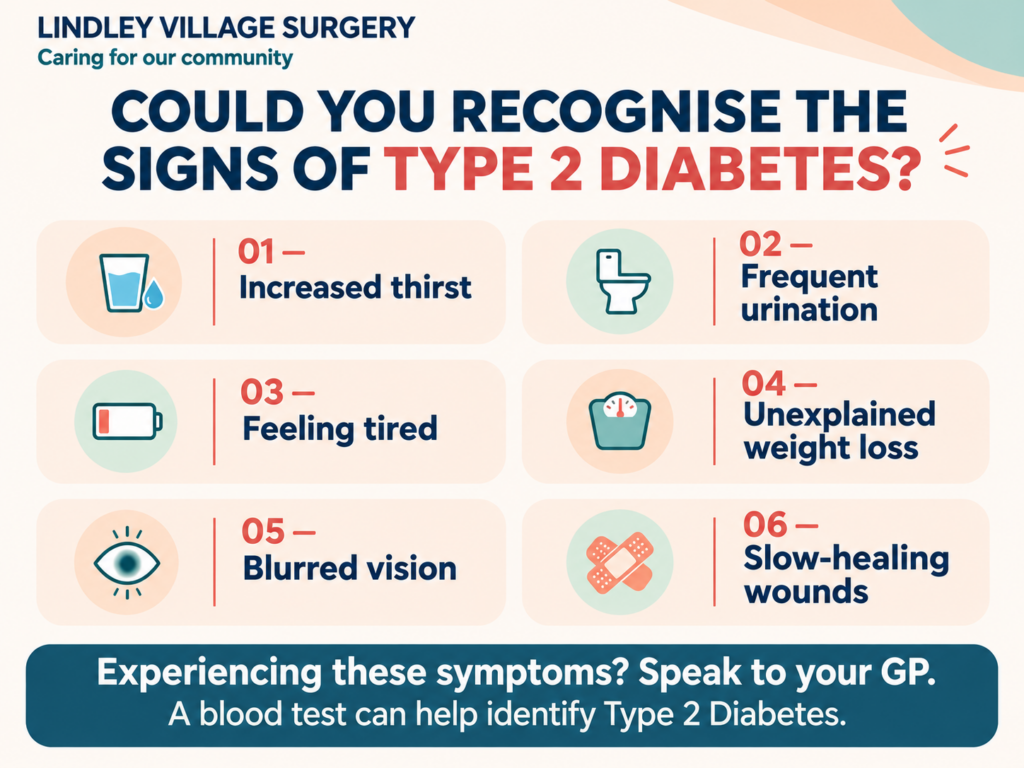
When symptoms do occur, they may include:
- Feeling unusually thirsty.
- Needing to pass urine more frequently, particularly at night.
- Feeling very tired without an obvious reason.
- Losing weight without trying.
- Blurred vision.
- Cuts or wounds taking longer to heal.
- Repeated episodes of thrush.
These symptoms can be easy to overlook or attribute to other causes. However, if you notice them, it is important to seek medical advice rather than ignore them.
A simple blood test can help establish whether your blood glucose levels are within the normal range.
Who is more at risk?
Anyone can develop Type 2 diabetes, but certain factors can increase the likelihood.
You may have a higher risk if:
- You are overweight or living with obesity.
- You have a close family member, such as a parent or sibling, with Type 2 diabetes.
- You are physically inactive.
- You have high blood pressure.
- You have previously had gestational diabetes during pregnancy.
- You are from certain ethnic backgrounds, including South Asian, Black African or Black Caribbean communities.
Age and ethnicity can also influence risk. People from some ethnic backgrounds may develop Type 2 diabetes at a younger age and at a lower body weight.
Having one or more risk factors does not mean you will definitely develop diabetes. It does, however, make understanding your risk and seeking appropriate advice particularly important.
What is pre-diabetes?
You may have heard the term pre-diabetes, also known as non-diabetic hyperglycaemia.
This means your blood glucose levels are higher than normal but not high enough for a diagnosis of Type 2 diabetes.
It is an important warning sign because it means you have a greater risk of developing Type 2 diabetes in the future.
However, it does not mean that developing diabetes is inevitable.
Making sustainable changes to your eating habits, physical activity and weight, where appropriate, can help reduce your risk.
Your healthcare team can explain your blood test results and discuss what steps may be helpful.
Five practical ways to reduce your risk
Small, consistent changes can make a meaningful difference. You do not need to transform your entire lifestyle overnight.
1. Make balanced food choices
Aim for a varied diet that includes vegetables, fruit, wholegrains, beans and other sources of fibre. Try to limit sugary drinks, highly processed foods and foods high in saturated fat.
You do not need to follow an extreme or restrictive diet. Focus on changes that are realistic and sustainable.
2. Move more throughout the day
Regular physical activity helps your body use insulin more effectively.
Walking, cycling, swimming, gardening or other activities you enjoy can all contribute. Start with manageable goals and gradually build up your activity.
3. Work towards a healthy weight
If you are overweight, even a modest amount of weight loss can help reduce your risk of developing Type 2 diabetes.
Focus on gradual, sustainable progress rather than quick fixes.
4. Avoid smoking
Smoking increases the risk of several serious health conditions, including cardiovascular disease and Type 2 diabetes. If you smoke, seeking support to stop can benefit your overall health.
5. Keep up with appropriate health checks
Knowing your blood pressure, cholesterol and blood glucose levels can help you understand your overall health.
If you have risk factors or have previously been told that your blood glucose is higher than normal, speak to your healthcare professional about appropriate monitoring and follow-up.
Getting tested and finding support
A blood test called HbA1c is commonly used to help diagnose Type 2 diabetes. It provides an indication of your average blood glucose levels over the previous two to three months.
If you are concerned about your risk, have symptoms or have previously been told you have pre-diabetes, speak to your GP surgery.
You can also use Diabetes UK’s Know Your Risk tool to get an indication of your risk and guidance on possible next steps.
For people identified as being at high risk, the NHS offers the Healthier You: NHS Diabetes Prevention Programme. This programme provides structured support with healthy eating, physical activity and weight management to help reduce the likelihood of developing Type 2 diabetes. Eligibility criteria apply.
You can find out more through the NHS Diabetes Prevention Programme.
Taking action early matters
Type 2 diabetes can affect more than just blood glucose levels. If it is not well managed, it can increase the risk of complications involving the heart, kidneys, eyes, nerves and circulation.
However, early diagnosis, appropriate treatment and regular monitoring can help reduce the risk of complications.
You do not need to wait until you feel unwell to take an interest in your health. Understanding your risk and having a conversation with a healthcare professional can be a valuable first step.
This November, take a moment to think about your health. Know your risk, recognise the signs and don’t put off seeking advice if something doesn’t feel right.
Lindley Village Surgery encourages patients to seek appropriate medical advice if they have concerns about their health. This article provides general health information and does not replace individual medical advice.
Opening Times
- Monday08:00am to 06:30pm
- Tuesday08:00am to 06:30pm
- Wednesday08:00am to 06:30pm
- Thursday08:00am to 06:30pm
- Friday08:00am to 06:30pm
- SaturdayCLOSED
- SundayCLOSED

In partnership with Doctors of the World UK, we will ensure that our practice offers a welcoming space for everyone who seeks to use our services, click here to learn more.
Useful Links


